Brunello Builds His Legacy
A Portrait That Sells
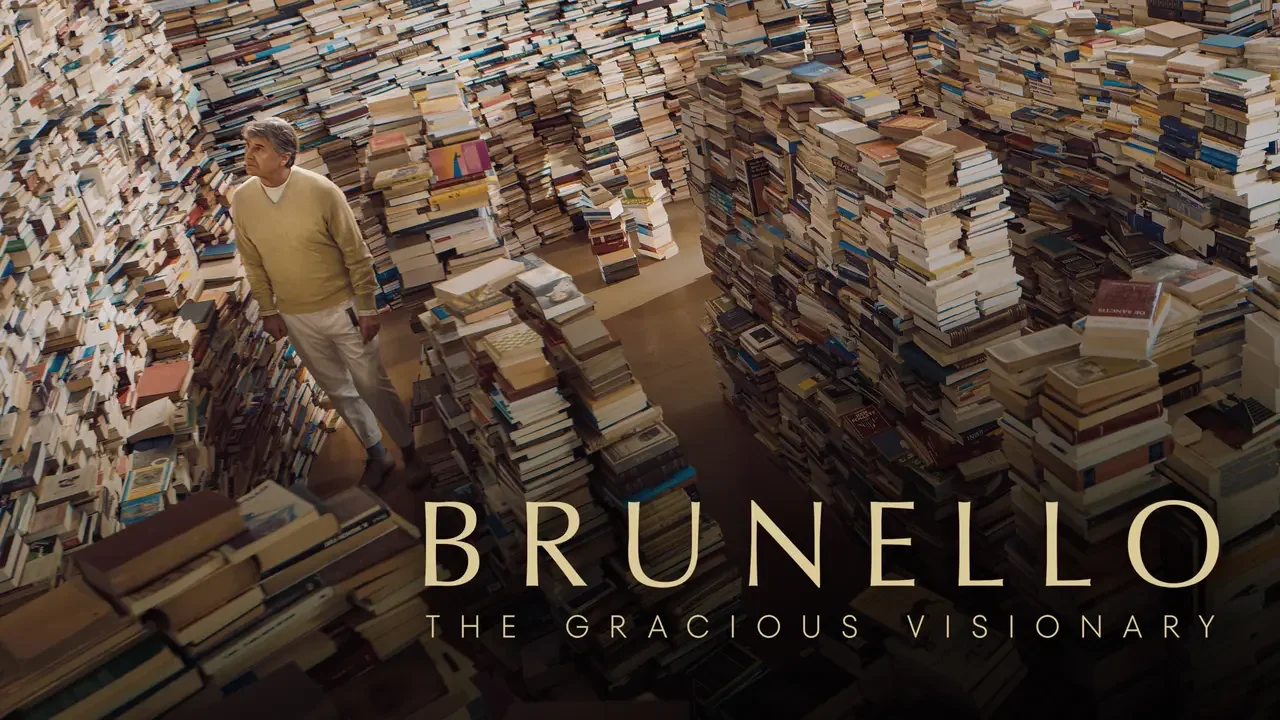
Giuseppe Tornatore makes an unusually candid promise for a biographical film: advertising belongs inside it. His published director’s note describes Brunello: The Gracious Visionary as a mixture of documentary, fiction and commercial, with factual and staged narratives overlapping. The question is not whether the portrait promotes its subject, but how that promotion shapes the life we encounter. Nick Vivarelli’s Variety report supplies the financial counterpart: fashion founder Brunello Cucinelli provided most of the $17 million production budget. He is both the person being remembered and a principal backer of the means of remembrance.
This is Tornatore’s Italian 2025 production Brunello, il visionario garbato, scored by Nicola Piovani, internationally titled Brunello: The Gracious Visionary and known in Hong Kong as BRUNELLO:築夢人生. Its 2026 international rollout follows that original production. The San Francisco Italian Cultural Institute lists a 127-minute, English-subtitled presentation; Vogue Taiwan gives 120 minutes. The discrepancy is unexplained, not evidence of a distinct Hong Kong cut. More consequential than those uncertain minutes is the film’s declared freedom to move between testimony, performance and promotion.
Remembering While Alive
Cucinelli explains the urgency in two separate interviews. He told Variety that posthumous documentaries about people he knew often failed to convey their depth; he wanted to witness the effects of his own story. Speaking through a translator to Robb Report, in Abby Montanez’s article syndicated by Yahoo, he similarly doubted that films made after death capture someone’s actual character. These concerns place accuracy alongside continued participation. A living subject can supply memories, interpret their significance and remain present when that interpretation enters public life.
The trajectory runs from rural Castel Rigone through the company founded in 1978 and its brightly colored cashmere to Solomeo, the restored village serving as headquarters and philosophical setting. T.J. Callahan’s review describes the film locating Cucinelli’s commitment to dignity in his father’s humiliation by employers. This is the biography’s moral origin story, not independently established labor history. In Montanez’s interview, Cucinelli describes himself as a temporary guardian rather than an owner. Together, those ideas frame commercial success as a response to past injury and an obligation to the future.
Lifestyle Journal’s promotional retelling gives the decision a setting: contemplating Solomeo one afternoon, Cucinelli becomes conscious of passing time and resolves to film his memories. The village is therefore both an achievement and a vantage point. He surveys his life from a landscape he has already helped reshape.
Walking Through the Past
Tornatore gives those memories bodies. Variety reports filming in Umbria, with Saul Nanni playing a younger Cucinelli; Travis Hung’s Vogue Taiwan feature identifies Francesco Cannevale and Francesco Ferroni as his childhood and adolescent selves. Callahan describes the older Cucinelli narrating while walking through his dramatized past. The device does more than fill gaps in an archive. The successful adult becomes a visible witness to the experiences offered as explanations of his success. Hindsight does not simply organize the scenes: it enters them.
The different materials make different appeals. Callahan describes archives, recreations and interviews; Sherin Nicole finds flashbacks blending fiction with fantasy, alongside testimonials from relatives, investors and celebrities including Oprah Winfrey and Liu Tao. Archives connect the portrait to a lived career, while fantasy lends that career a fable’s coherence. The approving witnesses give the recollections social authority. Lifestyle Journal describes a recurring card confrontation as a metaphor for life’s wagers and decisions: risk becomes part of the protagonist’s character, not merely a business calculation. These devices enact Tornatore’s stated overlap of documentary and staged storytelling. Piovani composed the score.
The Premiere Extends the Story
The launch extended the portrait beyond the screen. The December 4, 2025 world premiere inaugurated Cinecittà’s Teatro 22. Chief executive Manuela Cacciamani framed it as a meeting of Italian craftsmanship, culture and enterprise. Attendee Matteo Guidicelli emphasized hospitality, gratitude and exchanges with fellow guests: his account records an admiring social experience, not a test of business ethics. His attribution of the studio’s restoration to Cucinelli also cannot establish financing. Cinecittà specifically identifies Teatro 22 with its PNRR-funded development programme.
Produced by Brunello Cucinelli S.p.A. and MasiFilm with Rai Cinema, the film initially announced Italian dates of December 9–11 through 01 Distribution. Variety later reported over $1 million from a seven-day limited run. Its North American acquisition report named Blue Fox Entertainment and projected an April 14 New York premiere followed by more than 100 screens that spring. These were plans; Nicole’s July 24 review subsequently reported theatrical availability that day, without explaining the intervening timetable.
Cultural institute listings scheduled San Francisco for July 13 and London’s Picturehouse Central gala for July 16, advertising UK cinemas from July 24. Those listings document arrangements, not attendance. Hung reported an October 24 screening at Hong Kong’s Tai Kwun; Lifestyle Journal announced the November 12 local release. Hong Kong is a later destination for an already premiered film.
Charm Is Not Proof
Critics divide over whether this self-presentation becomes myth. Montanez judges that the film avoids mythologizing Cucinelli despite its reverential title. Nicole finds the fantasy lively and often effective, yet the accumulating praise makes the experience both enchanting and off-putting. Callahan welcomes the film while acknowledging substantial self-congratulation, suggesting that its subject’s likability saves it from becoming an extended advertisement. Their disagreement concerns the same mechanism: a charming narrator, a reconstructed past and approving witnesses reinforce one another. What registers as intimacy for one critic can feel suspiciously frictionless to another.
Amanda Jesuca, whose commentary Nicole quotes, raises the affordability barrier: loving this material world does not mean being able to buy its clothes. That is criticism, not an independent investigation. Hung asks whether cultural investment returns value to a place or chiefly builds an image. Solomeo’s restoration and cultural spaces give the question substance, but their cinematic appeal cannot verify wages, sustainability or profit allocation. Nor does Cucinelli’s reported financing prove or disprove his philosophy. It establishes his material stake in its presentation; evaluating the business requires a different kind of evidence.
Nicole’s description of the closing banquet gathers that tension into one image. Cucinelli sits at the head of a plentiful table; as the camera withdraws, it seems almost endless. Abundance becomes a picture of community, with the founder presiding. The invitation can be appealing without being conclusive. Taking a seat in this beautifully arranged world need not mean accepting its host’s entire explanation of how it works.