Ghost Soldier: Duty Meets Revenge
Protector or killing machine?
Jim Caviezel’s explanation for playing Henry “Fitz” Fitzgerald begins with an obligation: this former Green Beret cannot ignore injustice, even when intervening costs him. Hong Kong’s publicity begins closer to the result: an isolated fighter with secret weapons can destroy the corporate force threatening his home. Between those emphases lies the tension of William Eubank’s 2026 Ghost Soldier, locally titled 鬼影殺神. How does a protector defined by moral duty become the selling point for overwhelming retaliation?
These are different presentations of the same film, not evidence of alternate cuts: the English title, director, lead actor and Fitz character align across the listings. In her August 25 UHK preview, 吳佳雅 stresses revenge, military combat and advanced weaponry, framing the seizure of homes as the trigger for a one-man war. Caviezel, speaking to Janelle Ash at Fox News Digital five days earlier, stresses why Fitz must act. The local campaign sells what he can do once that decision is made.
Why Caviezel said yes
Caviezel says Fitz’s unbreakable moral code, service to his country and appetite for justice persuaded him to accept; enjoying action films was not the decisive reason. His description makes retirement conditional. Fitz may have withdrawn from public life, but he has not surrendered responsibility for others. That distinction matters to the premise: the corporation does not simply disturb his solitude; its coercion creates an injustice he believes he cannot leave unanswered.
“But it was Fitz's moral compass and his hunger for justice that made me say yes.”
Jim Caviezel · foxnews.com
Ash places the role alongside Caviezel’s portrayals of Jesus in The Passion of the Christ and Tim Ballard in Sound of Freedom. The actor supplies his own connection: he wants to portray men prepared to sacrifice for their convictions. He also argues that viewers want heroes and sees a renewed American willingness to defend home, land and community. Those are his beliefs about the culture, not established audience trends. His account explains his attraction to Fitz through the cost of doing right, rather than through the character’s arsenal.
When protection means firepower
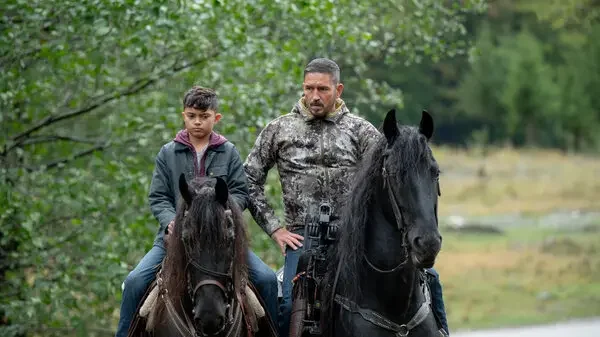
Glenn Kenny’s November 11 New York Times review supplies the concrete neighbourhood behind that language of protection. Brownstone wants to demolish Fitz’s Wyoming home to gain control of nearby water rights. Its transactions have a violent underside: one family is bought out at gunpoint, while the Hernandez family’s barn is burned. Fitz has been teaching the family’s youngster riding and marksmanship. That relationship gives his community ties a specific form: before becoming its armed defender, he is already passing on skills to a child.
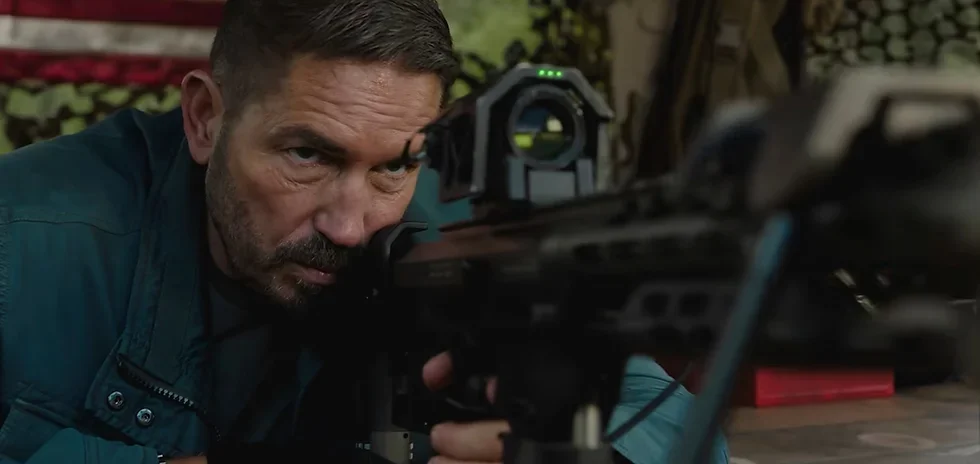
Fitz’s expertise also offers the means of spectacular punishment. Kenny describes one of the former soldier and ammunition engineer’s inventions: a small device resembling a raised road marker, capable of blasting through an opponent’s torso. Olivia Thirlby’s sheriff joins him after deciding the antagonists cannot be defeated lawfully. Her choice bridges duty and revenge: a representative of legal authority accepts the need to move beyond lawful remedies. The invention supplies a brutally efficient alternative, giving the protector’s moral certainty a matching destructive power.
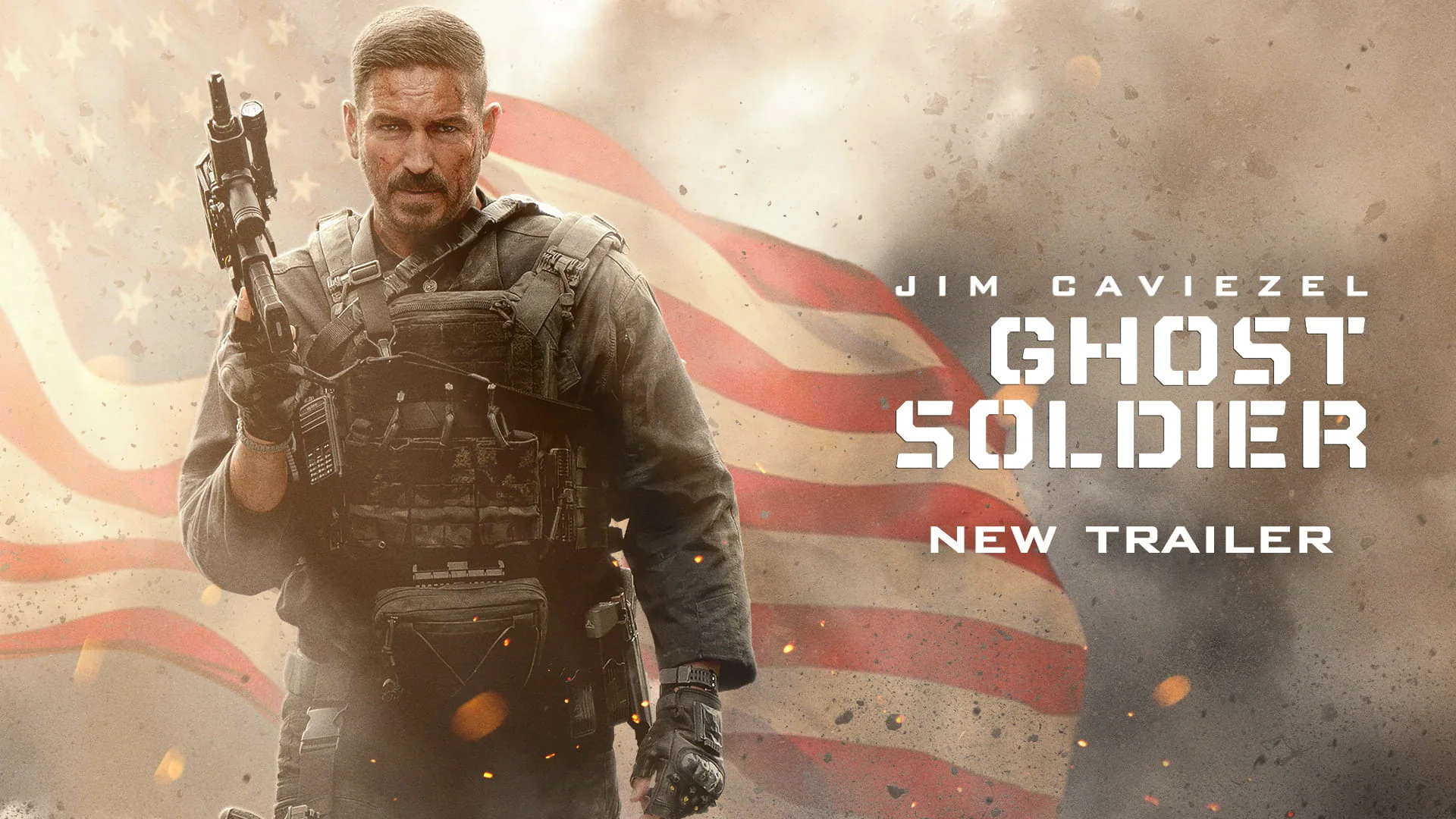
Kenny locates the film’s satisfaction in how briskly Fitz eliminates the opposition. Hong Kong publicity amplifies precisely that advantage. WMOOV highlights tracking micro-warheads; Pin Lo’s ReplayHK preview celebrates the combination of combat and technology, describing a poster with Caviezel in a tactical vest amid smoke and sparks. These fictional weapons and promotional images promise decisive retaliation, not a demonstration of real military technology or filmmaking technique. Kenny’s critical reading and the campaign converge on speed and superiority, although only the former assesses the finished film.
Hong Kong’s release promise
The release timetable has shifted. Ash’s August interview announced November 6 for US cinemas. The English Wikipedia entry subsequently records November 11, attributing the change to Veterans Day timing and competition avoidance. That explanation remains a secondary account without verification from the original scheduling report. Kenny’s November 11 review lists the film as in cinemas, providing contemporary theatrical context but not establishing why the date changed.
For Hong Kong, UHK’s August announcement promised November; ReplayHK’s November 5 preview specified November 26, matching WMOOV’s provisional listing. Their overlapping publicity represents one release promise, not independent confirmations. WMOOV lists English dialogue with Chinese subtitles, but leaves classification and runtime pending and reports no cinema information. UHK’s Cinema City link does not establish an engagement. The US review’s 90-minute, PG-13 listing cannot verify the Hong Kong cut or rating either. The invitation is clearer than those details: Caviezel offers a reason to defend the town; the local campaign promises the firepower to finish the job.