Anaïs Runs into Desire
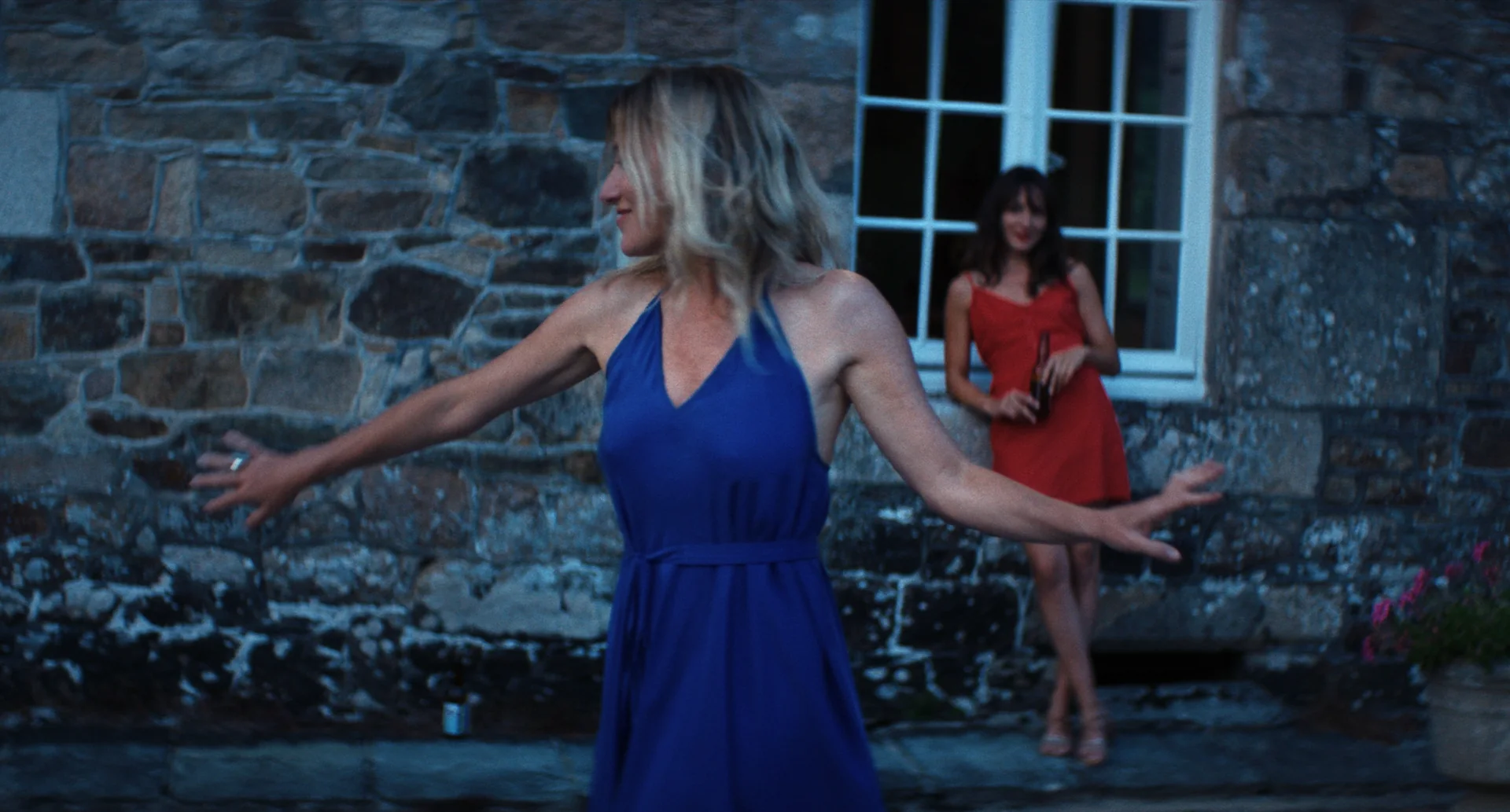
Running Is Not Freedom
Anaïs’s overdue rent ought to bring her to a halt. Instead, the opening encounter becomes another opportunity to talk her way past an obstacle. In Caroline Ely’s Film-Forward review, the landlady is bewildered into letting the payment slide, an early demonstration of a woman whose interruptions and oversharing leave little room for anyone else. Director Charline Bourgeois-Tacquet gives that momentum a different explanation in her interview with Ava Cahen: Anaïs keeps moving to avoid falling. The comedy and the vulnerability occupy the same gesture. Is she exercising freedom, or simply outrunning whatever might make her stop?
That tension drives the 2021, 98-minute Les Amours d’Anaïs, released in Hong Kong as 愛•難按捺. Anaïs Demoustier plays the cash-strapped thirty-year-old who becomes involved with Daniel, then falls for his partner Émilie. But the triangle matters less as a romantic puzzle than as a change in direction: the woman who can evade a demand for rent must eventually encounter a desire she cannot dismiss so easily.
The Feature Came First
The collaboration did not begin with a short film that simply grew longer. Speaking to Grégory Marouze in Lille on 10 September 2021, Bourgeois-Tacquet recalled conceiving the feature’s triangle before writing Pauline asservie. Making that short with Demoustier gave them a comic character and a shared rhythm. When the feature was subsequently offered to her, the director remembered, Demoustier wanted its heroine brought closer to the short’s protagonist, retaining her excesses and comic possibilities. The earlier story acquired the energy of the later collaboration.
The development route is distinct from that conception history. Pauline asservie competed at Critics’ Week in 2018; Bourgeois-Tacquet then joined its Next Step workshop, and the feature premiered in a 2021 special screening marking the section’s sixtieth anniversary. Its French release followed on 15 September 2021, with the Hong Kong opening advertised for 27 October 2022. The 2020 labels on French Film Festival UK and CINEMANIA listings are metadata discrepancies, not evidence of an earlier or different cut: both also list 98 minutes.
Building the Speed
Demoustier told Quentin Grosset in TroisCouleurs that other directors usually asked her to slow down. Bourgeois-Tacquet instead accelerated her already rapid speech and movement. Yet speed was not an invitation to improvise without limits. The staging was precise enough to feel constraining; the actress’s task was to find freedom inside it. She wanted Anaïs to remain susceptible to impulses beyond her control, rather than become a demonstration of technical mastery. The woman who explains herself incessantly must still be overtaken by her body.
“Ultimately, I found a lot of pleasure in the constraints.”
Anaïs Demoustier · troiscouleurs.fr · translatedRead the original
finalement, j’ai trouvé beaucoup de plaisir dans la contrainte.
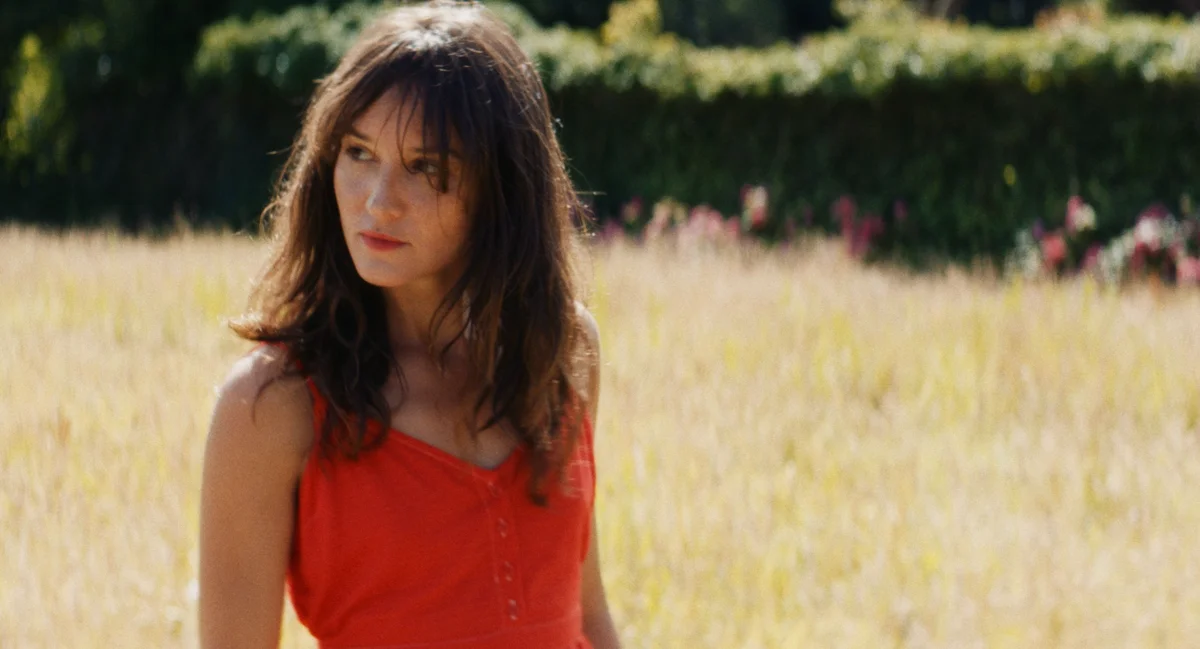
The director’s Lille account describes two ways of generating that pace: long takes animated internally by Demoustier’s movement, and passages divided into more shots. To Cahen, she named Eric Gautier’s work with Desplechin, Assayas and Chéreau as a model for energetic, choreographed sequence-shots; this film’s cinematographer was Noé Bach, its editor Chantal Hymans. Nor should critics’ Rohmer comparisons settle its ancestry. Peter Cox reads a revision of the French summer romance, but Bourgeois-Tacquet told Sophie Grassin that Jean-Paul Rappeneau’s Le Sauvage was the only film cited in her CNC statement of intent. Verbal fluency here is also a vehicle for unruliness.
Permission to Be Difficult
One line tested how far Demoustier could go. In Lille, she recalled worrying about Anaïs casually announcing an abortion without having warned the young man beforehand. Her concern was the character’s manner, not an argument over the decision itself. As she remembered it, Bourgeois-Tacquet reassured her that Anaïs’s underlying likability would carry the moment. Demoustier concluded that holding back would defeat the role. Having often played more morally agreeable women, she welcomed the combination of intellectual life, physical impulse and outrageous bad faith.
That wager does not oblige a critic to forgive her. Sabrina Schwob’s Ciné-Feuilles review isolates a tiny-elevator encounter: Anaïs ends up leaving her bicycle with Daniel, whom she has barely met. Her impulsiveness becomes someone else’s inconvenience. Ely’s harsher account of self-absorption identifies the same imbalance in the opening scene. At CST, Robin Entreinger praises the direction, rhythm and cast but finds insufficient maturity for real emotional impact. These readings expose the risk in the director’s reassurance: charm can sustain a performance without resolving what the character does to other people.
Making the Beach Scene
The beach intimacy with Valeria Bruni Tedeschi demanded another kind of physical precision. Demoustier told Marouze that it was difficult to perform, combining planned movements with unforeseen elements. Describing her broader approach to love scenes, she said she asks to know the actions and duration beforehand, thinks of her body like a dancer’s, and removes her contact lenses so the crew becomes less visible. Those are coping practices she described, not a shot-by-shot account of this particular filming. What she recalled specifically was a demanding shoot whose eventual shape remained uncertain despite substantial footage.
“I take out my contact lenses so I don’t see the crew too clearly.”
Anaïs Demoustier · lillelanuit.com · translatedRead the original
J’enlève mes lentilles pour ne pas trop voir l’équipe.
She was delighted by the edited scene, crediting Bourgeois-Tacquet and her editor—Hymans—with finding its form. After so much talk, Demoustier valued the silence, the palpable sand and heat, and an embrace that conveyed bodies discovering each other rather than sex alone. Cox’s criticism independently locates that discovery in the montage’s lilting, breathless rhythm. Bourgeois-Tacquet’s stated intention for summer landscapes was to convey sensuality and awakening desire. Together, these accounts suggest why the sequence changes the film’s pace: movement no longer merely clears Anaïs a path; it allows contact.
Learning to Listen?
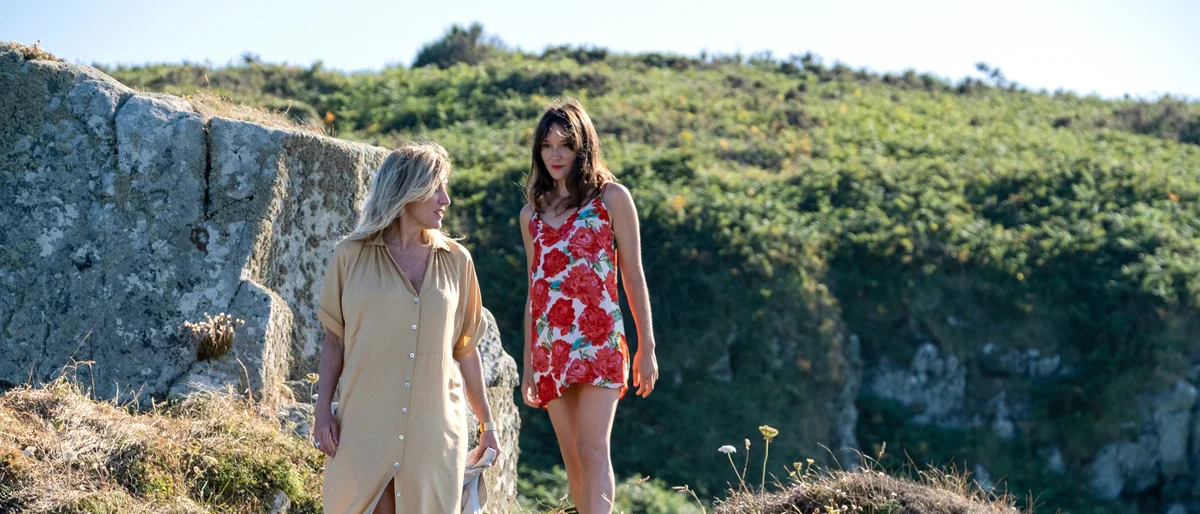
For Demoustier, the two attachments were never equal. She told Grosset that Daniel was secondary to Anaïs, while Émilie embodied someone she might become. She also rejected a simple generational opposition: the older woman’s desire for freedom was thoroughly contemporary. Literary affinity gives their attraction another dimension, but not through a researched performance mythology. Demoustier admitted she had not read the featured Duras novel, Le Ravissement de Lol V. Stein. What mattered to her was the intimacy of loving the same work, and recognising in another person’s writing something one wished to create.
Near the end, Émilie urges Anaïs to make something of her emotions and impulses. Demoustier recalled being personally moved when Bruni Tedeschi addressed her by the first name she shares with the character. Criticism remains divided over what this achieves. Cox finds understated emotional weight and a resonant wordless final beat; Ely leaves Anaïs’s capacity to attend to another person unresolved. Jean-Philippe Jacquemin, despite reservations about uneven momentum, praises an ending in which the characters seem to speak for themselves rather than deliver a moral. Read against those responses, the shift from relentless speech towards receptivity is a possibility, not a cure. Anaïs need not stop moving altogether; the question is whether another person can now alter her course.