Endgame’s Farewell, Back on Sale
A farewell with a preview
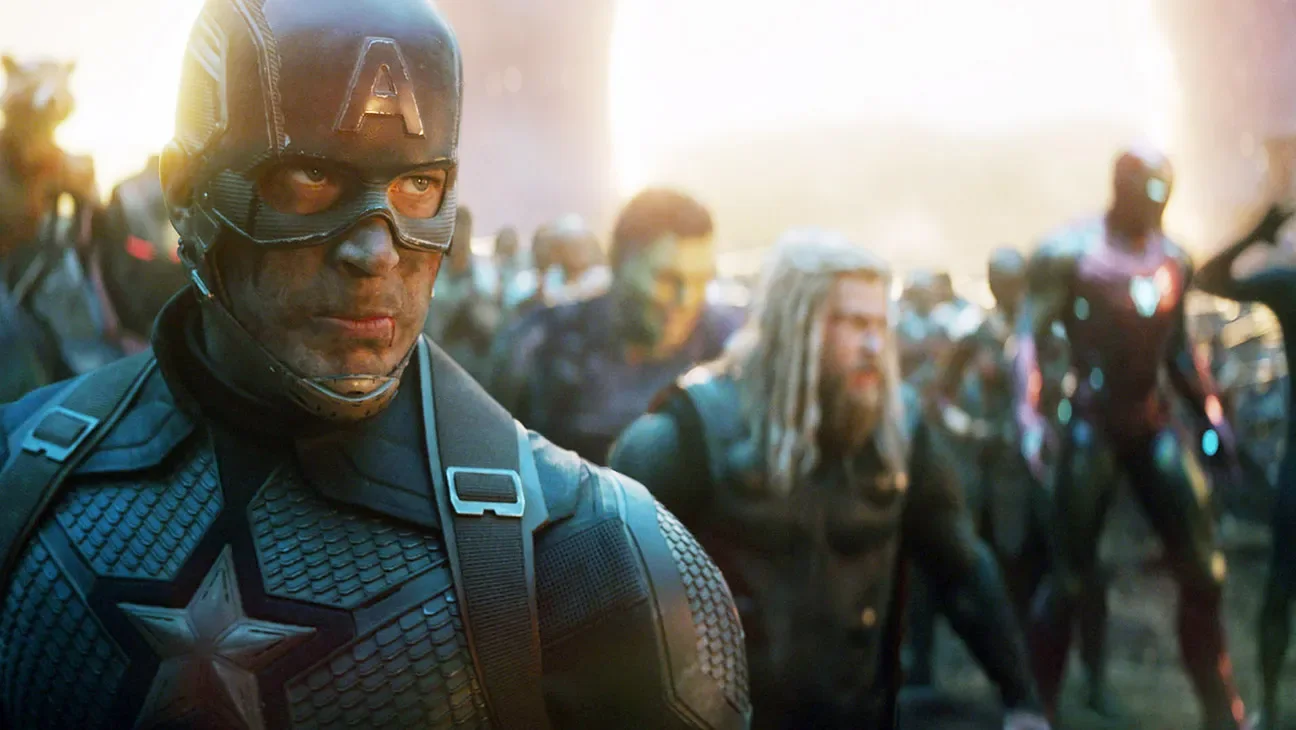
Captain America lifts the hammer; Tony Stark makes his fatal sacrifice. At a Hong Kong rerelease gathering of more than 300 viewers, those familiar scenes drew screams and tears again, according to HK01’s account. The attraction was not a new Avengers feature but another encounter with Joe and Anthony Russo’s 2019 Avengers: Endgame. Its ending now carries a second invitation: remember how these heroes said goodbye, then look ahead to the franchise’s next event.
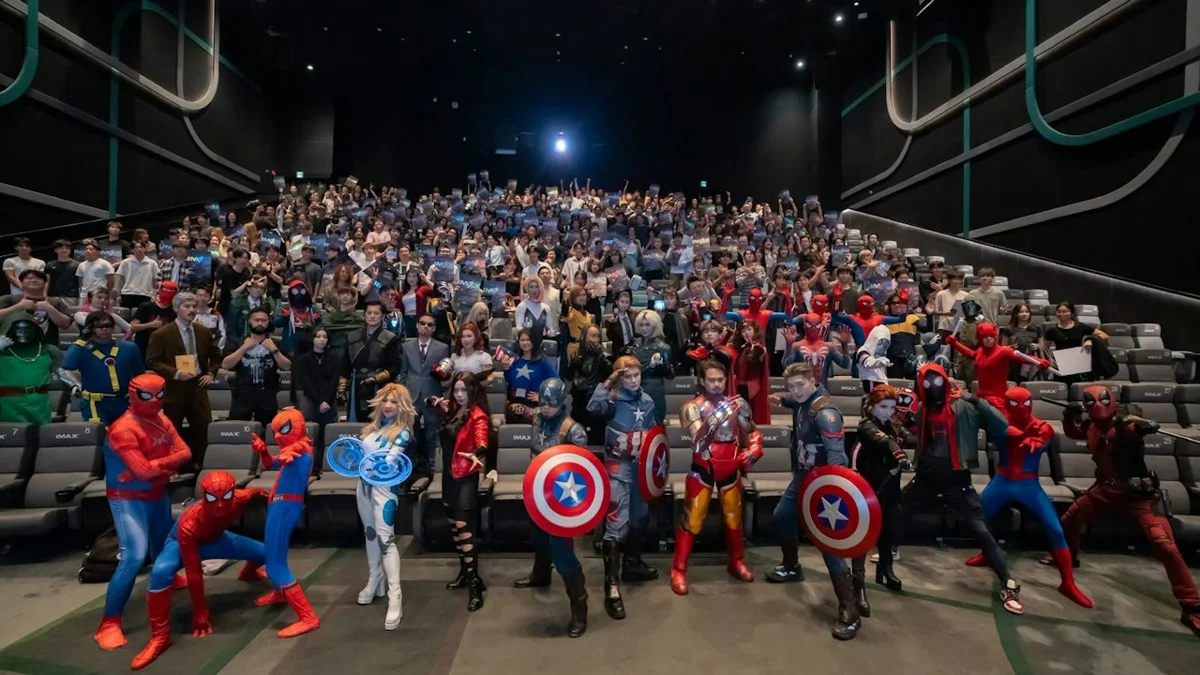
Marvel Studios Hong Kong explicitly brands this edition Avengers: Endgame Encore, promising exclusive Avengers: Doomsday footage and limited posters. HK01 dates the Hong Kong opening to September 24; Allen Theatres’ September 25 announcement concerns that chain’s separate booking, not the local release. The original film’s listed 181 minutes should not be mistaken for an Encore runtime. The official offer establishes extra promotional footage, not a verified new ending, restoration or specified number of added minutes.
The efficient plan falls apart
The original conclusion emerged through revisions rather than perfect advance planning. Adam Chitwood’s Collider production history traces the two-film proposal to a 2014 Marvel retreat, followed by brainstorming during Captain America: Civil War. Writers Christopher Markus and Stephen McFeely and the Russos eventually separated the projects into Thanos’s story and a film returning attention to the original Avengers. Letting Thanos win gave the first film its destination while leaving the second with a difficult starting point.
That uncertainty cost a practical shortcut. Kevin Feige explained, as quoted by Collider, that the plan had been to shoot both films’ scenes on shared sets together before dismantling them. Unfinished scripts forced sequential production instead. Narrative priorities also narrowed: McFeely said postponing the vanished heroes’ return gave the surviving original team its due. He recalled executive producer Trinh Tran breaking a stalemate by suggesting they kill Thanos at the beginning. The antagonist had achieved his purpose; killing him could therefore be consistent with his character without repairing anything he had done.
Five years with failure
The five-year jump made that distinction tangible. In the film’s audio commentary, quoted by Collider, McFeely described a brainstorming manifesto asking what alternative versions of the heroes might look like. Rather than invent fantasy doubles, the writers let catastrophe and time change them. Thor retreats into depression, Natasha keeps headquarters running, and Steve tends to other people’s needs. Tony, unusually, has become happier. Asking him to help is consequently not just another recruitment scene: the mission threatens a life the intervening years have allowed him to build.
Even Hulk’s apparent progress depended on withholding an earlier victory. McFeely recalled that Infinity War originally included Banner and Hulk reaching a compromise during the Wakanda battle, with Smart Hulk bursting from the armour to defeat Cull Obsidian. That breakthrough was removed, requiring late visual-effects work, because the third act needed accumulating losses rather than an isolated success. For the eventual recovery mission, Markus said Ant-Man supplied an existing technology associated with a different experience of time: a narrative foothold preferable to Tony simply inventing a time machine from nothing.
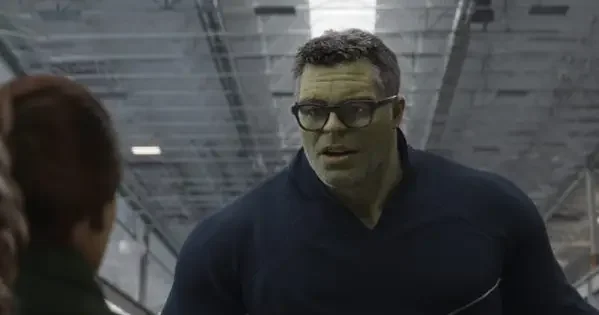
The emotional value of this detour was visible in contemporary criticism. Writing on April 25, 2019, Terrisa praised the attention to Thor’s regret and Scarlett Johansson’s early emotional impact. Writer Uncle, approaching the film as a farewell rather than revenge, singled out the elevator callback: Steve avoids the fight remembered from The Winter Soldier through a quiet declaration of Hydra allegiance. Returning to an old scene produces a different choice, not merely a replay. These are reviewers’ readings of the finished film, not accounts of what the actors intended.
Tony’s ending, Downey’s goodbye
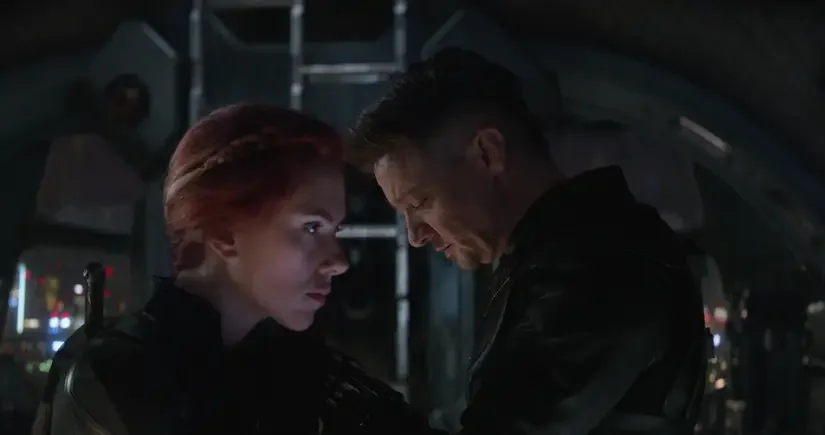
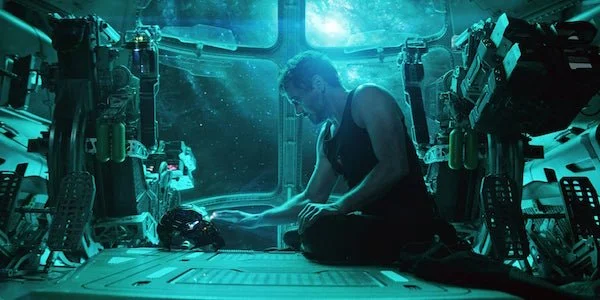
The sacrifices were planned, but their allocation was contested. In Collider’s account, McFeely understood Natasha’s death as her willingness to recover the Avengers, the family she had found after an abusive past. Yet one outline or draft sent Hawkeye over the cliff instead. Visual-effects producer Jen Underdahl argued against taking that act away from Natasha; Markus likewise defended her endpoint. Their explanation establishes a creative rationale, not an obligation to find the choice satisfying. Tony’s death was also conceived early as a selfless endpoint, and Anthony Russo said the filmmakers pitched the arc to Downey to ensure he was comfortable with it.
“We did pitch Robert his arc, because he kicked off the entire MCU.”
Anthony Russo · collider.com
Downey’s documented goodbye is smaller and less conclusive than Tony’s. Sarah El-Mahmoud’s May 16, 2019 CinemaBlend report describes his Instagram-shared wrap video at Pinewood in Atlanta. He acknowledged feeling many emotions, deferred a fuller speech to social media, and embraced Feige, Tran and the Russos as the crew cheered. This was a filmed wrap occasion, not an interview about performing Tony’s death. CinemaBlend also reported subsequent reshoots, including the addition of his final declaration of identity. The farewell footage therefore cannot establish which scene he shot last.
Steve grows old
Steve’s ending rests on a different possibility: choosing a private life. At a Shanghai fan event, Chris Evans explained Peggy as the love a man displaced from his own time might pursue if given the chance. Sebastian Peris relayed those remarks through YouTube via ComicBook.com; they are character interpretation, not an on-set recollection. In Anthony Breznican’s April 2019 interview report, the Russos placed Steve’s life with Peggy in a branched reality, leaving his return to hand over the shield unexplained rather than resolving every mechanical question.
“I think Steve Rogers would be interested in pursuing a relationship with Peggy Carter.”
Chris Evans · heroichollywood.com
The old man himself required precise intervention. The Russos told Breznican that prosthetic makeup was supplemented by digital work to reduce Evans’s muscular neck and adjust the face’s sagging contours, while preserving his performance. His hushed elderly voice needed no audio alteration. Technical continuity, however, did not ensure critical agreement. Writer Uncle read the shield handover as succession; Terrisa found the final Captain America passage comparatively weak and less forceful than Infinity War’s conclusion. A credible aged face can carry an ending without determining how strongly that ending lands.
“We didn't alter his voice at all,”
Joe Russo · yahoo.com
Keeping the ending closed
Whether such endings should remain closed was already disputed in public by 2024. Zack Sharf’s Variety report, republished by Yahoo that April, brought together Downey’s willingness to return, expressed to Esquire; the Russos’ GamesRadar+ response that they considered Tony’s story finished; and Feige’s earlier Vanity Fair commitment not to undo the sacrifice. These were historical positions, not confirmation of later casting or Encore’s contents. They distinguish an actor’s attachment to a role from filmmakers’ attachment to its ending.
“Happily. It's too integral a part of my DNA,”
Robert Downey Jr. · yahoo.com
Encore markets both attachments. Marvel’s casting-themed promotion names Sarah Halley Finn and looks back at assembling the ensemble, while Hong Kong’s campaign offers Doomsday footage. HK01 reports applause and cheers for that preview at its featured gathering; am730’s October 6, 2026 report supplies a commercial measure, putting rerelease takings above HK$7.3 million and the film’s local cumulative total at HK$229 million. Those reported figures need no global-record claim to illuminate the proposition. The original film lets its heroes stop. The package around it gives viewers a reason to keep waiting.