The Work Behind Mastermind’s Mystery
Summer Rain, Cold Nights
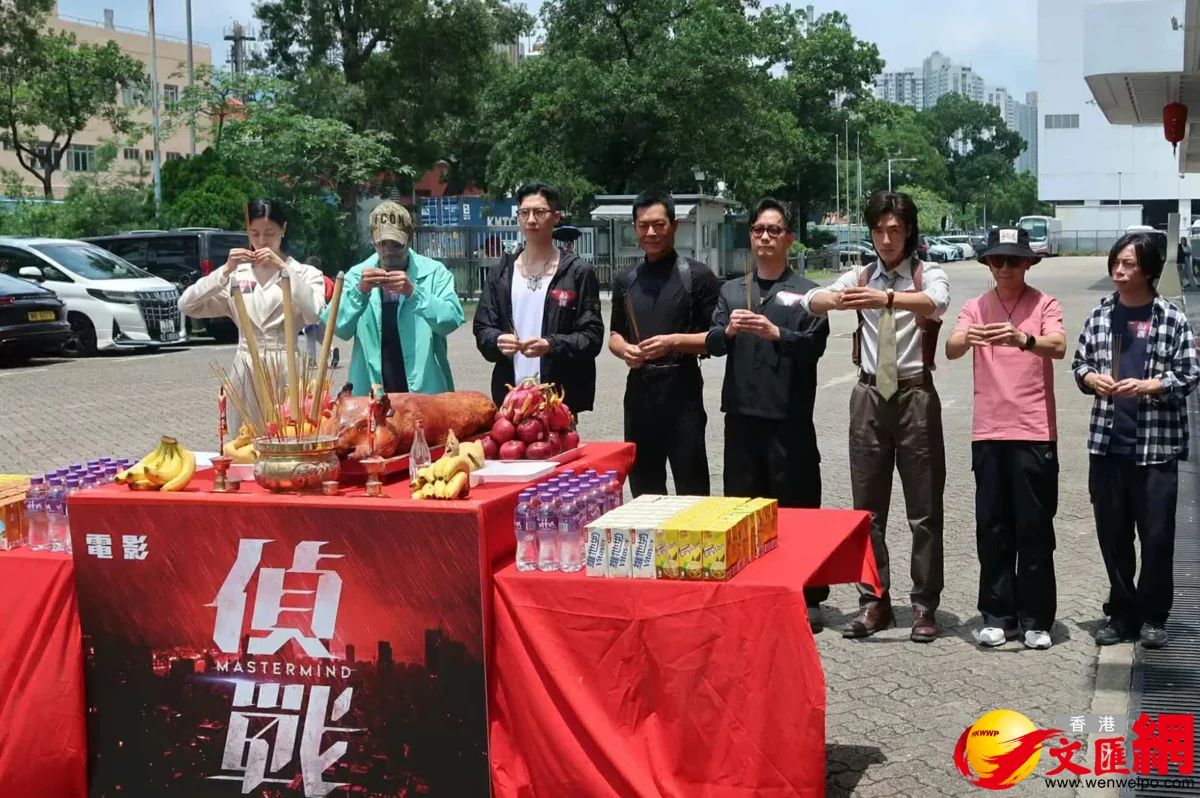
Summer did not make Louis Koo’s nights on Mastermind warm. At the film’s blessing ceremony in Tai Po on June 1, 2024, he recalled several nights of filming in rain, cold despite the season. One fight pitted him against six or seven black-clad opponents; the experience reminded him of wrestling in mud. His investigator might use sophisticated technology, but playing him meant enduring rain, cold and combat. Koo also described a story unfolding over just a few hours, with thunder and lightning. While colleagues had more studio scenes, his account of the production centred on exposure to rain and the demands of fighting.
“There was also a scene fighting six or seven men in black. It was like mud wrestling.”
Louis Koo · wenweipo.com · translatedRead the original
仲有一場要同6、7個黑衣人打,好似泥漿摔角咁。
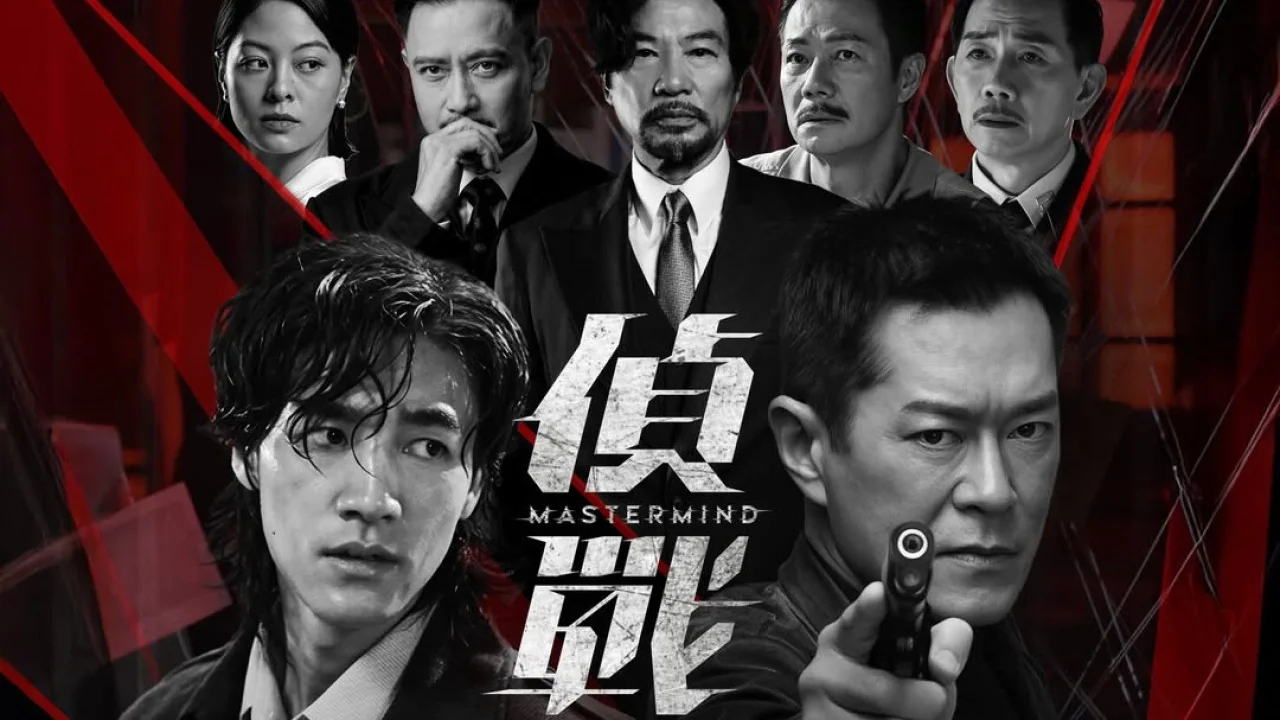
That production became the 2026 release Mastermind, or 偵戰, directed by James L.J. Hung and starring Koo, Ci Sha, Simon Yam and Tse Kwan Ho. Its Hong Kong opening was announced for October 8, with Hung stressing his commitment to Cantonese. The focus here is that Hong Kong Cantonese theatrical release, without assuming an identical mainland edition. Henderson Pictures’ synopsis sets out the trap: a detainee disappears, then turns up dead in a locked archive ten kilometres away; the fatal bullet comes from Koo’s investigator’s gun. The man equipped to investigate becomes the prime suspect.
Building a Noir World
Hung told ELLE that he wrote Mastermind after The Seventh Lie, his 2014 debut feature. His attraction to film noir demanded a complete world, so art direction and cinematography required extensive advance design. The cast was assembled and preparations were close to ready when the pandemic broke the financing chain. This was not simply a postponed shoot: he described having to start over. The setback helped propel the more personal 無名指. Completing that film restored his creative momentum; renewed demand as cinemas and the industry steadied allowed Mastermind to restart. Its eventual scale followed a project rebuilt after its original foundations had fallen away.
His background combined preparation with adaptability. After film school in California, Hung worked on CG and editing at Technicolor; later, production work at TVB taught him to enjoy on-set script changes and direct exchanges with actors. His working habits therefore crossed the divide between advance planning and Hong Kong improvisation. The development dates are less settled. ELLE’s July 2026 article anticipated an early-2027 release and described filming as completed the previous year. Contemporary reporting establishes filming activity in June 2024 and an October 2026 Hong Kong release announcement, but no firm wrap date or explanation for the differing release expectations.
“I grew to enjoy improvising, such as adjusting scripts on the spot and communicating with actors on set.”
James L.J. Hung · elle.com.hk · translatedRead the original
我變得喜歡即興創作,像臨時調整劇本,與演員現場溝通等。
Keeping Discomfort Hidden
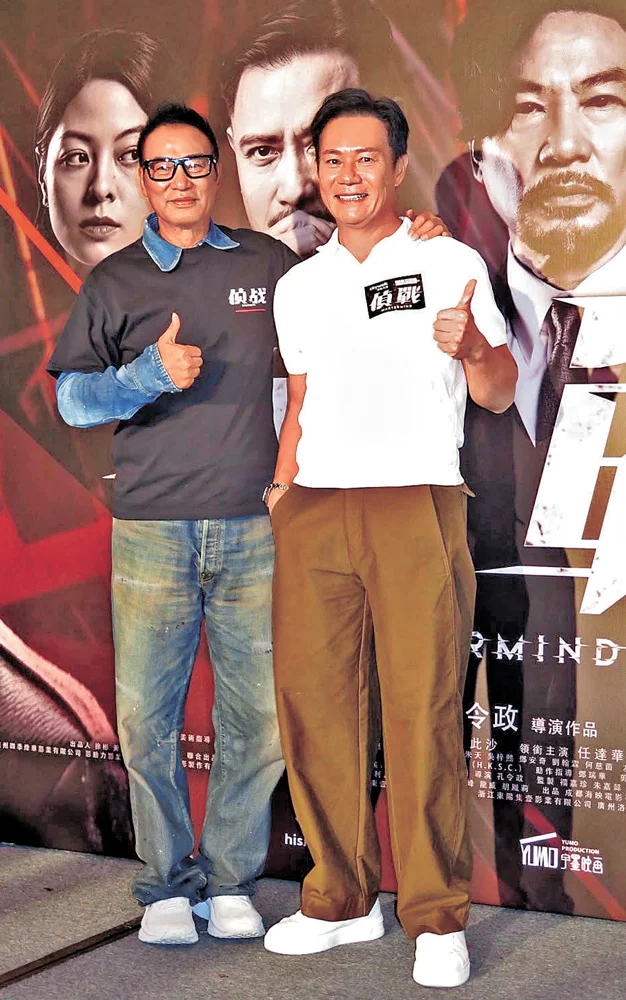
For Yam, authority involved concealing the body’s discomfort. At the 2024 ceremony, he contrasted his character’s openly domineering manner with Koo’s hidden strength. Yet he had to maintain that exterior in a coat and gloves during hot weather, without letting sweat show. Tse offered a shorter, resigned account: his character also required a coat in summer, regardless of concern about overheating. At the premiere, Hung recalled actors working without complaint in stifling enclosed sets, praising their professionalism. Together, the recollections identify a practical demand behind the imposing figures: the performers had to keep the heat from becoming visible.
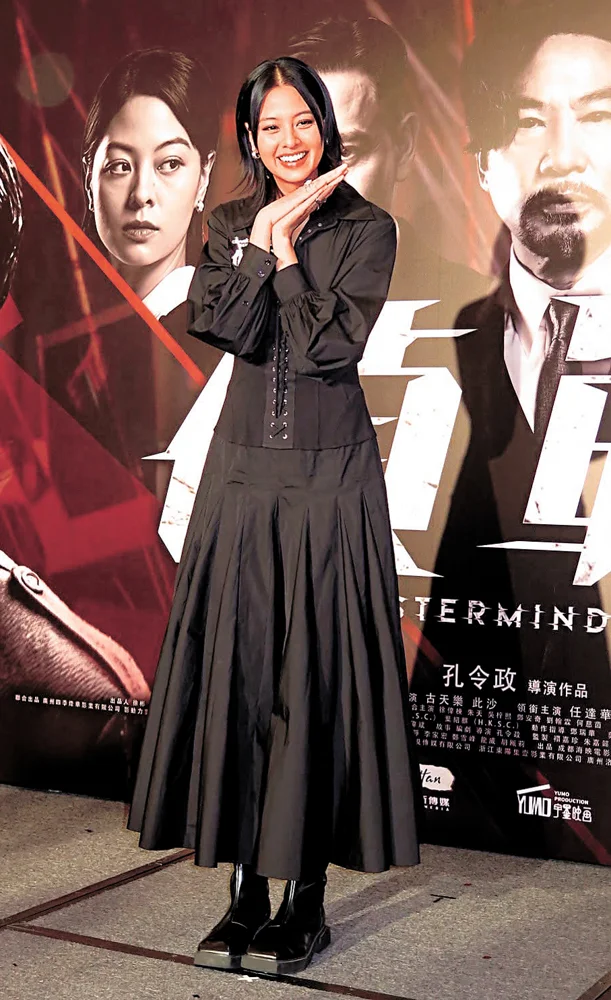
Amy Lo faced a different concealment problem. At the October 5 premiere, she said acting alongside Koo, Yam and Tse made her so nervous that she hardly dared speak. Her villain, however, needed a cool exterior: the anxiety of a relatively junior performer could not leak into the role. Her sociability between takes served another purpose. In the same premiere exchanges covered by Wen Wei Po and on.cc, Lo described bringing laughter and energy to the set, while Ci Sha gave her someone with whom to share the pressure of learning from senior actors. Off-camera warmth and on-camera menace required different kinds of control.
“Having Ci Sha there feels comfortable and happy. As younger actors, learning from seniors together makes me feel fortunate.”
Amy Lo · wenweipo.com · translatedRead the original
有此沙在場,感覺特別舒服開心,難得大家是年輕一代,有人陪我向前輩學習,感覺好幸福。
Finding a Common Language
Ci Sha’s language accounts reveal a change, though not its timing. In June 2024, he said he intended to deliver dialogue in Mandarin because uncertain Cantonese might make his law-enforcement character sound unprofessional. By October 2026, he described tackling Cantonese and acknowledged post-production dubbing. Hung said he had insisted on Cantonese because he was making a Hong Kong film primarily for Hong Kong viewers. The language was therefore part of the director’s conception of whom the film addressed, as well as an acting challenge. Neither account establishes when the plan changed or who supplied every line in the finished soundtrack.
The practical welcome began before fluency. Ci Sha told am730 that hearing Cantonese around him on his first day made him anxious; Lo approached him to say hello. He also credited Koo with giving him room to perform in their scenes together. Yam described talking with him in the rest area and sharing pineapple buns with butter to help him relax. Eddie Cheung recognised his own newcomer nerves in Ci Sha, comparing the experience to Hong Kong actors working on the mainland without fully understanding the conversation. Their accounts describe inclusion through time, attention and food, rather than a formal acting method.
“In real life, he gave me room to shine in many scenes. I was very moved. Respect.”
Ci Sha · am730.com.hk · translatedRead the original
戲外,有很多戲份他都讓我表現出來,很感動,Respect。
Clues and Divided Loyalties
Yam’s invitation to viewers was unusually concrete. In a post-premiere interview with Hong Kong Commercial Daily, he urged attention to bloodstain positions and the placement of wire, suggesting that close observation would unlock Hung’s puzzle. His recommendation makes the arrangement of physical details central to his account of the mystery, without settling whether its clues are fairly presented. Cheung proposed a different focus: the characters’ double-sided nature, particularly the grey territory entered when good people do bad things. One actor directs attention towards physical evidence; the other towards decisions that resist a clean moral classification.
Hung’s explanation of Koo’s withdrawn investigator connects the mystery to a wider concern. In ELLE, he described a man who could retreat into his library and disregard the world, yet cannot relinquish the possibility of changing it. Hung placed Mastermind alongside his other work as an exploration of inheritance and identity. He linked those preoccupations to growing up between Hong Kong and America, then finding himself treated as an outsider after returning. Where Yam offers viewers details to inspect, Hung’s account asks what keeps an isolated person attached to a world he might otherwise abandon.
An Unsettled Release
Distribution brought questions the cast could not settle. Contemporary reports placed the mainland opening on October 1, 2026, followed by the October 5 Tsuen Wan premiere; October 8 remained the announced Hong Kong opening. Reports described an October 5 notice cancelling the current mainland run and promising a later restart, citing creative intentions and the presentation and viewing experience. Wen Wei Po said the post was subsequently deleted, while an expanded report’s caption said it had become public again. Those changes in visibility left the situation unsettled; they did not establish censorship, a different cut or a confirmed commercial reason for withdrawal.
The premiere coverage captured different responses. HK01 framed Ci Sha’s interrupted answer as agitation; am730 and Hong Kong Commercial Daily documented staff stopping or redirecting withdrawal questions. Elsewhere, Ci Sha said actors could not control distribution, and Hung said he had received no official notice. The sequence of those interview moments is unclear. Hung nevertheless maintained his commitment to Cantonese, while Cheung argued that experienced filmmakers must give successors time and opportunities. That argument had a concrete counterpart in the production: Lo’s first-day welcome, Yam’s efforts to ease language anxiety, and the performance space Ci Sha said Koo had offered him.
“Let more people take over, and we’ll have the chance to keep working longer!”
Eddie Cheung · hk.on.cc · translatedRead the original
等多啲人接班,咁我哋咪有機會做得耐啲!